What is ICT?
Information and communications technology (ICT) is an extensional term for information technology (IT) that stresses the role of unified communications and the integration of telecommunications (telephone lines and wireless signals) and computers as per IFGICT, as well as necessary enterprise software, middleware, storage and audiovisual, that enable users to access, store, transmit, understand and manipulate information as per the international federation of ICT.
The term ICT is also used to refer to the convergence of audiovisual and telephone networks with computer networks through a single cabling or link system. There are large economic incentives to merge the telephone network with the computer network system using a single unified system of cabling, signal distribution, and management. ICT is an umbrella term that includes any communication device, encompassing radio, television, cell phones, computer and network hardware, satellite systems and so on, as well as the various services and appliances with them such as video conferencing and distance learning.
ICT is a broad subject and the concepts are evolving. It covers any product that will store, retrieve, manipulate, transmit, or receive information electronically in a digital form (e.g., personal computers including smartphones, digital television, email, or robots). Theoretical differences between interpersonal-communication technologies and mass-communication technologies have been identified by the philosopher Piyush Mathur. Skills Framework for the Information Age is one of many models for describing and managing competencies for ICT professionals for the 21st century.
The Positive impacts of ICT
- Access to information: Possibly the greatest effect of ICT on individuals is the huge increase in access to information and services that has accompanied the growth of the Internet. Some of the positive aspects of this increased access are better, and often cheaper, communications, such as VoIP phone and Instant Messaging. In addition, the use of ICT to access information has brought new opportunities for leisure and entertainment, the facility to make contacts and form relationships with people around the world, and the ability to obtain goods and services from a wider range of suppliers.
- Improved access to education, e.g. distance learning and on-line tutorials. New ways of learning, e.g. interactive multi-media and virtual reality. New job opportunities, e.g. flexible and mobile working, virtual offices and jobs in the communications industry.
- New tools, new opportunities: The second big effect of ICT is that it gives access to new tools that did not previously exist. A lot of these are tied into the access to information mentioned above, but there are many examples of stand-alone ICT systems as well
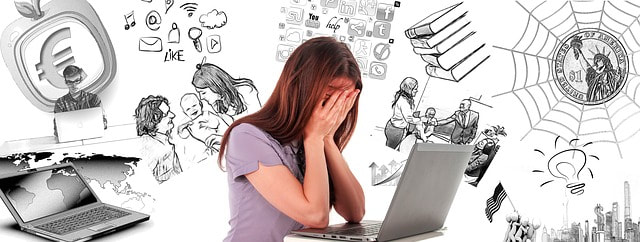
The Negative Impacts of ICT
- Job loss: One of the largest negative effects of ICT can be the loss of a person’s job. This has both economic consequences, loss of income, and social consequences, loss of status and self esteem. Job losses may occur for several reasons, including: Manual operations being replaced by automation. e.g. robots replacing people on an assembly line.Job export. e.g. Data processing work being sent to other countries where operating costs are lower. Multiple workers being replaced by a smaller number who are able to do the same amount of work. e.g. A worker on a supermarket checkout can serve more customers per hour if a bar-code scanner linked to a computerized till is used to detect goods instead of the worker having to enter the item and price manually.
- Reduced personal interaction: Being able to work from home is usually regarded as being a positive effect of using ICT, but there can be negative aspects as well. Most people need some form of social interaction in their daily lives and if they do not get the chance to meet and talk with other people they may feel isolated and unhappy.
- Reduced physical activity: A third negative effect of ICT is that users may adopt a more sedentary lifestyle. This can lead to health problems such as obesity, heart disease, and diabetes. Many countries have workplace regulations to prevent problems such as repetitive strain injury or eyestrain, but lack of physical exercise is rarely addressed as a specific health hazard.
- Depression and anxiety. Human beings need face-to-face contact to be mentally healthy. Nothing reduces stress and boosts your mood faster or more effectively than eye-to-eye contact with someone who cares about you. The more you prioritize social media interaction over in-person relationships, the more you’re at risk for developing or exacerbating mood disorders such as anxiety and depression.
- Cyberbullying. About 10 percent of teens report being bullied on social media and many other users are subjected to offensive comments. Social media platforms such as Twitter can be hotspots for spreading hurtful rumors, lies, and abuse that can leave lasting emotional scars.
- Self-absorption. Sharing endless selfies and all your innermost thoughts on social media can create an unhealthy self-centeredness and distance you from real-life connections.
- Accessing Stored Communications or hacking; Intentionally accessing, without authorization, a facility through which an electronic communication service is provided. The act of obtaining unauthorized access to data from computer network. This is typically done to commercial and government sites to threaten its owner. In late 2015, a group of Anonymous Philippines hacked the Twitter account of actress Maine Mendoza, who plays the famous character Yaya Dub of the popular AlDub tandem and posted links and messages on the account.
The Youth’s Role in Helping to Promote ICTs Responsible Use
Over 70% of youth report use of social media such as Facebook, Instagram, Snapchat, Twitter, YouTube, Tumblr, and the list of possible platforms continues to expand. The majority of youth report using more than one social media platform. Social media use, and internet use more generally, is a typical part of most youths’ daily lives. Supporting them in responsible use and navigation of various platforms is important for any supportive adults in their lives.
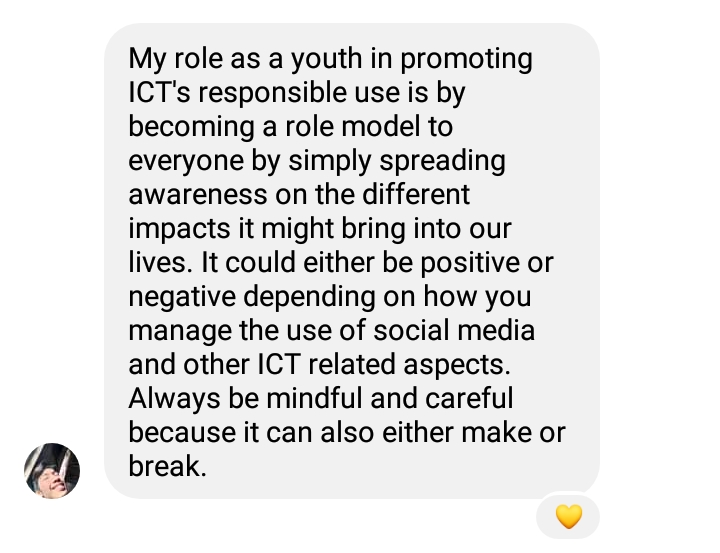
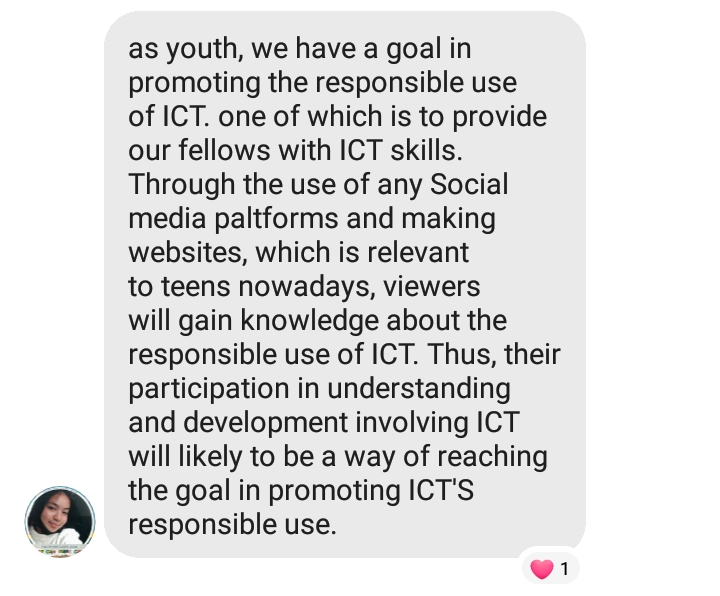
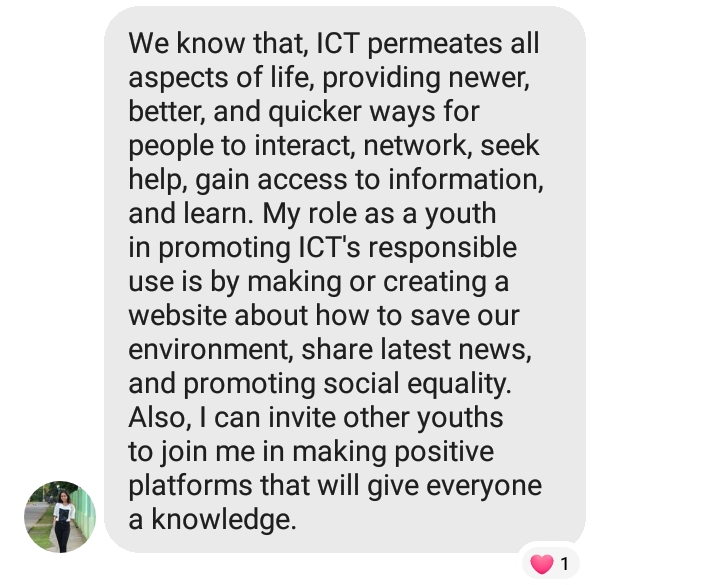
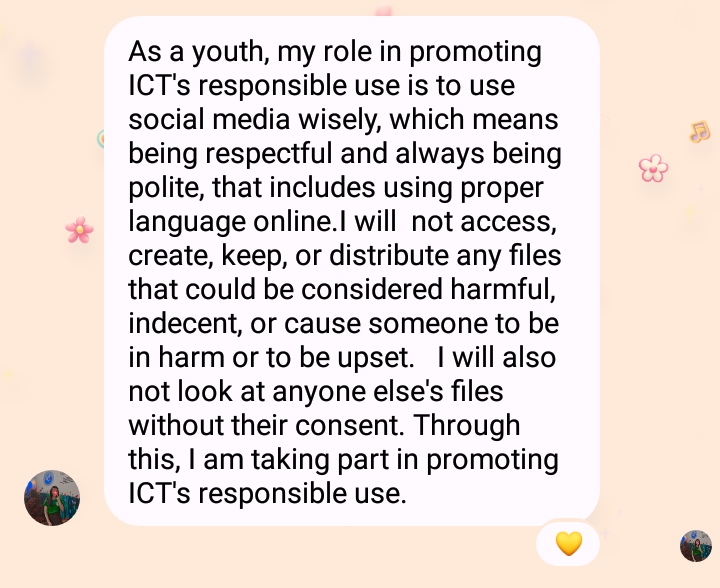
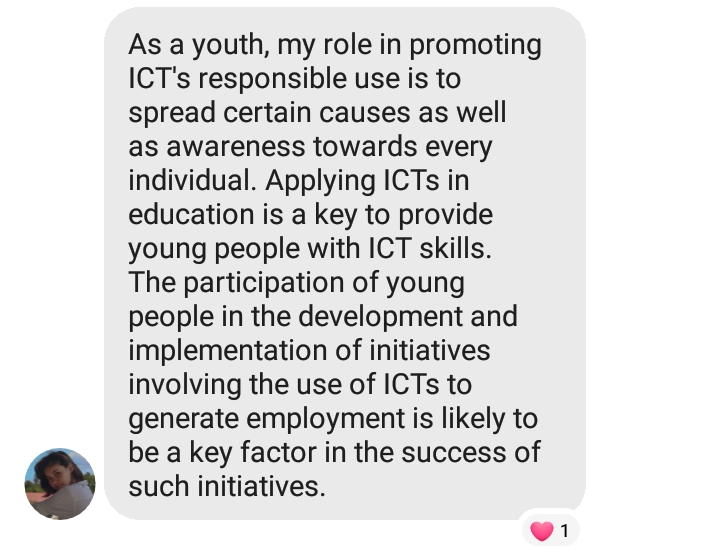
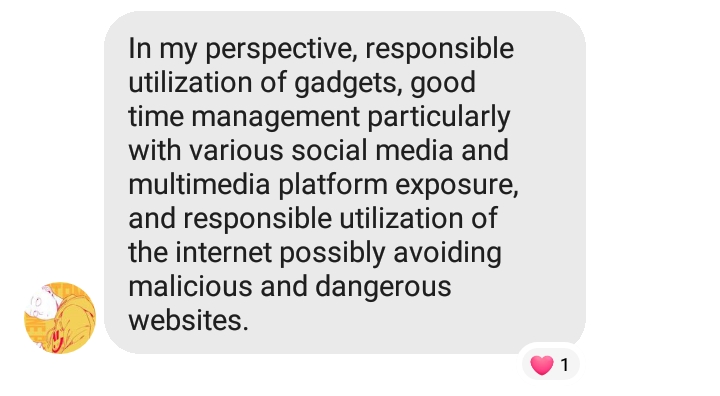
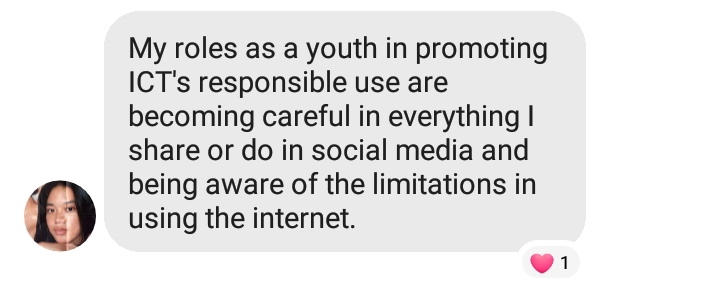
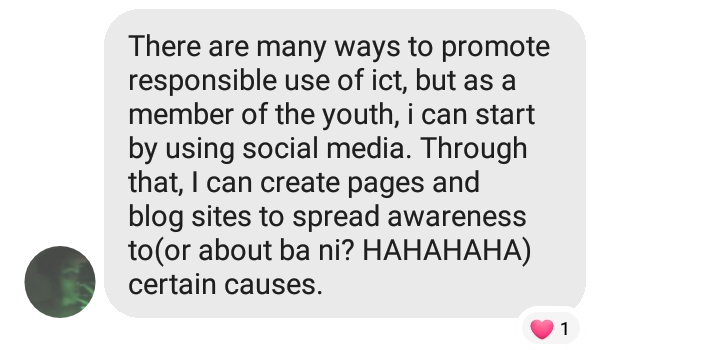
Here’s the response of my classmates as to what is/are their role(s) in helping to promote ICTs responsible use.
 Veah's blogs